Matz and Schramm Families - Person Sheet
NameWilliam Addison Dusenbury 
Birth17 Sep 1839, New York
Death4 Aug 1890
BurialChestnut Hill Cemetery, Portville, New York
OccupationManaged Tionesta, Pennsylvania Lumber Mills For 20 Years Then Returned To Portville.
FatherHenry Richard Dusenbury (1801-1860)
MotherCaroline Butler (1811-1871)
Spouses
Birth16 Aug 1845, Cuylerville, New York
Death12 Sep 1922, Portville, New York
BurialChestnut Hill Cemetery, Portville, New York
FatherHiram Truesdell (1813-1855)
MotherHelen Mar Cameron (1819-1892)
Marriage27 Aug 1878, Belfast, New York
Notes for William Addison Dusenbury
Of Newtown, Pennsylvania in 1886 (There are many references to Newtown, PA, but the only Newtown on modern maps is in the wrong part of PA. Other references are to Newton Mills in Forest County, which makes sense at the county level but modern maps show no Forest Mills.)
From website of Soper Wheeler Co., California 2003:
1860 Henry Dusenbury dies. William Dusenbury, Henry’s son, takes over the family business.
1865 Nelson Platt “N.P.” Wheeler, age 23, moves to Newtown and assumes management of the lumber company and its approximately 20,000 acres of timber. He finds both mills in poor condition and few dependable employees.
1867 William Dusenbury joins Nelson Wheeler to help run the lumbering operations in Stowtown.
1865-1880 The Wheeler and Dusenbury Lumber Co. in Stowtown falls on hard times. The lack of a good transportation system to haul lumber to market, machinery breakdowns, labor shortages, economic problems created by the Civil War and bad weather combine to idle the mills.
1880 The Wheeler and Dusenbury Lumber Co. invests large amounts of capital in new mills and modern machinery in Stowtown. Steam power begins to replace waterpower, while railroads take the place of horses and mules.
1883 The so-called Reno Railroad is built by the Wheeler and Dusenbury Lumber Co. to haul logs to their new mill. The track is built adjacent to Hickory Creek. Logs are floated down Hickory Creek to the mill during periods of high water and hauled on horse-drawn sleds during the winter.
1884 Under the leadership of N.P. Wheeler, the West Hickory Bridge Company is formed. The 640-foot wood truss bridge crosses the Allegheny River. The bridge carries both the Hickory Valley Railroad and is a toll road for private vehicles. This bridge opens up new markets for the Wheeler and Dusenbury Lumber Co.
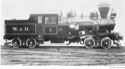
1885 A new thirteen-ton Shay locomotive, specifically designed for logging operations, is purchased by Wheeler and Dusenbury Lumber Co. Madison Church, a riverboat pilot, is hired as its first engineer. A band saw is purchased and installed in the new mill. It becomes the first successful band mill operating in the United States.
1886 After sawing pine for many years, N.P. Wheeler decides to expand the operation to include cutting hemlock. A new mill with both a band and gang saws is built to cut hemlock. It is called the ‘Hemlock or lower mill’ and was located just below the ‘Pine or upper’ mill. The two mills had a combined capacity of over 100,000 feet per day.
1890 William A. Dusenbury dies.
1890 Albert Soper dies and his son, Alexander, becomes president of the Soper Lumber Co. At this time the Soper Lumber Co. employees approximately 250 men in Chicago and 200 in Michigan.
1894 Nelson P. Wheeler inspects timberlands in Michigan. He and his brother, William E. Wheeler, investment in several lumber operations in northern Michigan including the Manistique Lumber Company and the Chicago Lumber Company. William E. Wheeler later becomes president of the Chicago Lumber Company.
1899 A fire strikes the lumberyard destroying over 6,000,000 feet of lumber. The mills are saved. The Wheeler and Dusenbury Lumber Co. at this time was one of the largest lumber companies in Pennsylvania owning between 40,00 and 55,000 acres of pine, hemlock and hardwood timber.
1900 At the beginning of the 20th century, the Wheeler and Dusenbury Lumber Co. is about to enter its most profitable period in history. Two large band mills are fed raw logs by a railroad logging system with over 50 miles of track. The American Lumberman journal reports that the Wheeler and Dusenbury mills produced over 20,000,000 feet in 1906 – 8,000,000 feet of white pine, 10,000,000 feet of hemlock, and 2,000,000 feet of hardwoods.
1904 Nelson P. Wheeler and James P. Soper form the Soper-Wheeler Co. and purchase 14,000 acres of timberland on the west slope of the Sierras between the Yuba and Feather Rivers.
From website about Endeavor Lumber Company 2003:
Between 1887 and 1938, railroads built and owned by the Wheeler & Dusenbury Co., Endeavor PA, formed one of the largest logging rail networks in Northwest Pennsylvania. A logging railroad network sprawled over Warren and Forest Counties fed two large band mills at Endeavor, PA, hosted rod and geared steam locomotives, and for a time, even connected the Collins Pine empire to the outside world as the Hickory Valley Railroad. The railroad featured an entry in the Official Railway Guide, a formal timetable, and the only rail bridge across the Allegheny River between Oil City and Warren to connect the empire to the Pennsylvania Railroad at West Hickory.
W&D sawed the last log in 1934, closed the railroad in 1938, razed the big sawmills, and sold the site the the Endeavor Lumber Company in 1941. A new, smaller, mill on the same site has grown and expanded over the years, making Endeavor one of the longest-lasting lumber mill sites in the United States. The mill site retains many original features, such as the office, shops, boiler house, and log pond. Endeavor remains a "classic" mill town today.
From Web site of Hilltop Lodge:
William Addison Dusenbury's Historic Hilltop Lodge
ALL THE GREAT LODGES BUILT DURING THE TURN OF THE 20TH CENTURY, THE HILLTOP LODGE STANDS ALONE. THE FIVE ORIGINAL BUILDINGS WERE CONSTRUCTED OF AUTHENTIC REDWOOD FROM WILLIAM ADDISON DUSENBURY'S OWN REDWOOD FOREST.THE GIANT REDWOOD TREES WERE TRUCKED ACROSS COUNTRY AND MILLED ON SITE. THE SITE THAT WAS CHOSEN FOR HIS LODGE WAS LOCATED 2217 FEET ABOVE SEA LEVEL, ON TOP A GREEN MOUNTAIN IN THE ALLEGHANY MOUNTAIN RANGE, IN WESTERN NEW YORK. SURROUNDING THE HILLTOP LODGE IS A STORY BOOK BLACK FOREST THEME. THOUSANDS OF FLOWERING EVERGREENS, HUNDREDS OF PINE AND HARDWOOD TREES AND RICH GREEN GROUND COVER WERE PLANTED. FLAGSTONE PATHWAYS WIND THROUGH BEAUTIFUL ROCK AND WATER GARDENS.
From website of Soper Wheeler Co., California 2003:
1860 Henry Dusenbury dies. William Dusenbury, Henry’s son, takes over the family business.
1865 Nelson Platt “N.P.” Wheeler, age 23, moves to Newtown and assumes management of the lumber company and its approximately 20,000 acres of timber. He finds both mills in poor condition and few dependable employees.
1867 William Dusenbury joins Nelson Wheeler to help run the lumbering operations in Stowtown.
1865-1880 The Wheeler and Dusenbury Lumber Co. in Stowtown falls on hard times. The lack of a good transportation system to haul lumber to market, machinery breakdowns, labor shortages, economic problems created by the Civil War and bad weather combine to idle the mills.
1880 The Wheeler and Dusenbury Lumber Co. invests large amounts of capital in new mills and modern machinery in Stowtown. Steam power begins to replace waterpower, while railroads take the place of horses and mules.
1883 The so-called Reno Railroad is built by the Wheeler and Dusenbury Lumber Co. to haul logs to their new mill. The track is built adjacent to Hickory Creek. Logs are floated down Hickory Creek to the mill during periods of high water and hauled on horse-drawn sleds during the winter.
1884 Under the leadership of N.P. Wheeler, the West Hickory Bridge Company is formed. The 640-foot wood truss bridge crosses the Allegheny River. The bridge carries both the Hickory Valley Railroad and is a toll road for private vehicles. This bridge opens up new markets for the Wheeler and Dusenbury Lumber Co.
1885 A new thirteen-ton Shay locomotive, specifically designed for logging operations, is purchased by Wheeler and Dusenbury Lumber Co. Madison Church, a riverboat pilot, is hired as its first engineer. A band saw is purchased and installed in the new mill. It becomes the first successful band mill operating in the United States.
1886 After sawing pine for many years, N.P. Wheeler decides to expand the operation to include cutting hemlock. A new mill with both a band and gang saws is built to cut hemlock. It is called the ‘Hemlock or lower mill’ and was located just below the ‘Pine or upper’ mill. The two mills had a combined capacity of over 100,000 feet per day.
1890 William A. Dusenbury dies.
1890 Albert Soper dies and his son, Alexander, becomes president of the Soper Lumber Co. At this time the Soper Lumber Co. employees approximately 250 men in Chicago and 200 in Michigan.
1894 Nelson P. Wheeler inspects timberlands in Michigan. He and his brother, William E. Wheeler, investment in several lumber operations in northern Michigan including the Manistique Lumber Company and the Chicago Lumber Company. William E. Wheeler later becomes president of the Chicago Lumber Company.
1899 A fire strikes the lumberyard destroying over 6,000,000 feet of lumber. The mills are saved. The Wheeler and Dusenbury Lumber Co. at this time was one of the largest lumber companies in Pennsylvania owning between 40,00 and 55,000 acres of pine, hemlock and hardwood timber.
1900 At the beginning of the 20th century, the Wheeler and Dusenbury Lumber Co. is about to enter its most profitable period in history. Two large band mills are fed raw logs by a railroad logging system with over 50 miles of track. The American Lumberman journal reports that the Wheeler and Dusenbury mills produced over 20,000,000 feet in 1906 – 8,000,000 feet of white pine, 10,000,000 feet of hemlock, and 2,000,000 feet of hardwoods.
1904 Nelson P. Wheeler and James P. Soper form the Soper-Wheeler Co. and purchase 14,000 acres of timberland on the west slope of the Sierras between the Yuba and Feather Rivers.
From website about Endeavor Lumber Company 2003:
Between 1887 and 1938, railroads built and owned by the Wheeler & Dusenbury Co., Endeavor PA, formed one of the largest logging rail networks in Northwest Pennsylvania. A logging railroad network sprawled over Warren and Forest Counties fed two large band mills at Endeavor, PA, hosted rod and geared steam locomotives, and for a time, even connected the Collins Pine empire to the outside world as the Hickory Valley Railroad. The railroad featured an entry in the Official Railway Guide, a formal timetable, and the only rail bridge across the Allegheny River between Oil City and Warren to connect the empire to the Pennsylvania Railroad at West Hickory.
W&D sawed the last log in 1934, closed the railroad in 1938, razed the big sawmills, and sold the site the the Endeavor Lumber Company in 1941. A new, smaller, mill on the same site has grown and expanded over the years, making Endeavor one of the longest-lasting lumber mill sites in the United States. The mill site retains many original features, such as the office, shops, boiler house, and log pond. Endeavor remains a "classic" mill town today.
From Web site of Hilltop Lodge:
William Addison Dusenbury's Historic Hilltop Lodge
ALL THE GREAT LODGES BUILT DURING THE TURN OF THE 20TH CENTURY, THE HILLTOP LODGE STANDS ALONE. THE FIVE ORIGINAL BUILDINGS WERE CONSTRUCTED OF AUTHENTIC REDWOOD FROM WILLIAM ADDISON DUSENBURY'S OWN REDWOOD FOREST.THE GIANT REDWOOD TREES WERE TRUCKED ACROSS COUNTRY AND MILLED ON SITE. THE SITE THAT WAS CHOSEN FOR HIS LODGE WAS LOCATED 2217 FEET ABOVE SEA LEVEL, ON TOP A GREEN MOUNTAIN IN THE ALLEGHANY MOUNTAIN RANGE, IN WESTERN NEW YORK. SURROUNDING THE HILLTOP LODGE IS A STORY BOOK BLACK FOREST THEME. THOUSANDS OF FLOWERING EVERGREENS, HUNDREDS OF PINE AND HARDWOOD TREES AND RICH GREEN GROUND COVER WERE PLANTED. FLAGSTONE PATHWAYS WIND THROUGH BEAUTIFUL ROCK AND WATER GARDENS.